Showing posts with label insurance auto. Show all posts

Wednesday, August 31, 2011

Hired and Non-Owned Business Auto Exposures

Are You Protecting Your Business Properly?


In today’s litigious society, accident claimants will often seek recovery from as many sources as


can be found. It’s not difficult to imagine scenarios wherein any company with employees (and


possibly not even operating from a physical location) can still be sued based on non-owned auto


liability in the aftermath of a motor vehicle accident.


The classic example exists of an employee using their personal vehicle for a work errand. At the

accident site, the employee mentions, “I was just on an errand for XYZ Company,” and XYZ

Company ends up being named in an ensuing lawsuit, particularly if the employee doesn’t have

sufficient liability limits on his personal auto policy.


Or what if the owner of a company—still with “no owned autos”—is involved in a serious accident

and the claimant realizes the owner has most of his personal wealth in his company? The

claimant will likely include the company in his lawsuit, and without specific coverage for nonowned

auto liability, the insurance program would not protect the insured in these instances.


Hired auto exposures arise differently, but again, it’s not difficult to anticipate situations where

an employee or officer of a company may suddenly need to travel and rent an auto, and if it’s in

the course of business, to assume it’s covered by the company’s insurance. Hired auto physical

damage exposure occurs here as well, but again, without specific coverage in place prior to an

accident, a company may be looking at an uninsured claim.


Almost every operating business entity has liability exposures from hired and non-owned auto liability, and frequently for hired physical damage as well, whether or not the business owns any autos.
A good commercial agent, like JASON SHROOT knows that not only do their clients need this coverage, the lack of the coverage can lead to a real nighmare to any business owner who chooses to ignore this risk exposure.


Please Contact Jason Shroot directly by calling 714-988-3325 and learn more about your commercial insurance policy's risk management pratices.  Also reach Diversified Insurance Quotes by emailing Jason at jason@diversifiedinsurancequotes.com or visiting www.diversifiedinsurancequotes.com




Thursday, April 7, 2011

Collector Cars Specialty Coverage

Collectible Auto Insurance

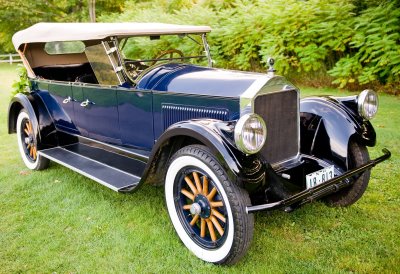
From their ’57 Chevy to their ’69 Pontiac GTO, collector car enthusiasts get revved up about their cars. While they may not be nearly as excited about their insurance, it’s important to find them quality coverage at a good price.

Endorsing a collector car on a standard auto policy may be easier for you, but opting for a specialty policy is usually a better fit for the collector car owner. A specialty policy can provide better value for the owner. For example, specialty carriers provide “agreed value protection,” which means that the car is guaranteed to receive an exact value in the event of a total loss, no matter the market fluctuations.

What’s more, specialty carriers provide lower rates based on how infrequently collectors use these cars. Some carriers may also provide added value for the customer, such as claims people who "get" collector cars, and flatbed towing in the case of a breakdown.

Agreed vs. Stated Value

Agreed value protection, also called an “agreed value policy,” means that a collector car is insured for a specific dollar amount that the insured and carrier have agreed upon. The value is based on the car’s number of original parts and the quality workmanship of modified parts. The owner of the vehicle will receive the agreed amount in the event the car is totaled, no matter the market fluctuations.

In comparison, a “stated value policy” takes market value fluctuations into account. For example, under a stated value policy (often used by standard auto carriers), a collector car may be insured at the cash value of $20,000. But if the car is totaled in an accident, the car owner may only receive $15,000 because of a drop in market value.

Assess the Value

One of your biggest challenges may be to accurately assess a car’s value. A specialty carrier can help you determine what the agreed value should be. You’ll just need to gather some of the following information:

Identify whether it’s a professionally restored original car, an un-restored original, or a “driver” car.:

A professionally restored original has been restored to its original specifications yet still has the original engine and drive train. These cars demand a premium, especially if everything is documented. An un-restored original is a completely original car that has the original paint, interior, engine and drive train.A driver car, the most common collector car, is perfect for the enthusiast who can’t afford a six-figure investment. It’s still collectible but not worth as much as an original because of changes made to the engine, interior and paint. You need to understand whether or not modifications warrant an increase in value by asking:

What type of engine? Who built it? How much did they invest?What body modifications have they made? (chopped, channeled, sectioned, etc.)Who painted it? How much did they invest?Who did the interior work? Is it custom or factory replacement? What type of transmission and differential do they have? How much did they invest in the drive train?

For A Collectibe Car Insurance Quote Please Contact
Jason Shroot at 714-988-3325.