Showing posts with label jbs diversified insurance solutions. Show all posts

Saturday, May 7, 2011

Tips For a Hit & Run Accident

We all never want to admit fault when involved in an accident...but what about when you aren't even in the car and.... You come out of a store into the parking lot only to notice that your car is different than when you left it. It has been hit, presumably by another vehicle, and no one left a note! This type of insurance claim, referred to as a hit and run, seems to be happening more frequently than ever.

First, call the police in the town where the incident happened. Detail the time, place and location of the accident. If there is no police report and there is a payment made through insurance, the incident will be logged as the fault of the driver, and that driver can be surcharged.

Next call your insurance agent, Jason Shroot at 714-988-3325. Even though the collision is not your fault, you may still need to rely on your auto policy for the repair of your vehicle. The only way your policy will respond is if it includes the collision coverage. If you have no collision coverage, you will need to pay for the repair to your vehicle out of your own pocket. Unfortunately even if there is collision coverage on the policy, you are still responsible for the deductible since the company has no responsible party to claim this against.

As most vehicle hits and runs happen in parking lots, it is a difficult situation to prevent. Parking under lights and action by alert by-standers will help reduce the possibility. If you observe a hit and run, record the license plate of the car doing the damage and offer to serve as a witness; this will help minimize the consequences to the party whose vehicle was damaged.

There is not a week that goes by when a consumer realizes they assumed they had the proper coverages to protect their auto and they come to the conclusion that they are underinsured for the coverages to meet their needs.  For More Information on Your Auto Policy Coverages Please Call Jason Shroot. 

(714) 988-3325


Friday, April 15, 2011

Did You Know Few California Homes Have Earthquake Insurance?

Few CA Homes Have Earthquake Insurance...
The recent tragic earthquake and tsunami that struck Japan has raised questions regarding insurance coverage and provide a stark reminder that the United States is also vulnerable to these natural disasters, according to the Insurance Information Institute. 
"Everyone, no matter where they live, should contact their agent or company representative to make sure that they have the right type and amount of insurance for their specific situation," said Jeanne M. Salvatore, senior vice president for the I.I.I. "All Americans also need to have an up-to-date home inventory of their personal possessions and an evacuation plan," she said.
The potential cost of earthquakes in the United States has been growing because of increased urban development in seismically active areas and the vulnerability of older structures, which in some cities may not have been built or upgraded to current building codes. Standard homeowners, renters, and business insurance policies do not cover damage from earthquakes. Coverage is available either in the form of an endorsement or as a separate policy. (And a flood insurance policy would provide coverage for a tsunami.)

Many private insurers offer earthquake coverage. In California, homeowners can also get coverage from the California Earthquake Authority (CEA), a privately funded, publicly managed organization.

Only about 12 percent of California residents currently have earthquake coverage, down from about 30 percent in 1996, 2 years after the Northridge, California, earthquake. Unfortunately, 86 percent to 90 percent of U.S. homeowners lack earthquake coverage, according to A.M. Best.

To Learn More About The Proper Earthquake Insurance Needed To Protect Your Home Please Contact Jason Shroot @ 714.988.3325 or jason@diversifiedinsurancequotes.com or http://www.jasonsellsinsurance.com/ 


________________________________________

Sunday, April 10, 2011

5 Tips How Uninsured Motorists Coverage Can Protect You

Most Americans are surprised to learn that, nationally, approximately 1 in 6 drivers on the road are uninsured. This information comes from a recent 2010 study by the Insurance Research Council. The study further shows that in some states, as many as one in three drivers are uninsured or underinsured, and that there is a solid correlation between unemployment and lack of insurance. Furthermore, statistics show that nearly one out of every two accidents involves an uninsured or inadequately insured driver.
How Can You Protect Yourself from the Costs of an Uninsured Motorist?
You should ensure that your auto insurance policy includes both uninsured motorist (UM) and underinsured motorist (UIM) coverage. As a rule, the limits on these policies should be as high as your policy's property damage and bodily injury limits. 


When someone without insurance causes an accident that involves your car, or if your car was damaged by a hit-and-run driver, UM coverage would pay for the resulting claims. On the other hand, UIM insurance provides coverage when someone else causes an accident, but does not have enough insurance to adequately cover all of your costs.
You also need to consider how much your life would change, if you were hit by an irresponsible driver. How would you make your car and mortgage payments, and pay your other expenses if you were permanently injured?

UM and UIM coverages bear the cost of lost wages if you are unable to work after an injury. If you do not have these coverages and are hit by an uninsured motorist, the only other option is to pursue the driver in small claims or civil court. This often proves to be a difficult and expensive option. Thus, the benefits of this coverage can be substantial compared to the relatively low expense.

 
What Should You Do if You Are Hit by an Uninsured or Underinsured Motorist?
If the driver has insurance, copy down the other driver's insurance and contact information. Whether they have a policy or not, get the driver's name, address, and phone number. Furthermore, you should always write down the license plate number and call the police, even if the accident appears to be minor. A police report is always valuable in determining who was at fault.

For More Information and a FREE California Auto Insurance Quote Please ContactJason Shroot at Diversified Insurance Solutions.  Please call 714-988-3325.  Email:  jason@diversifiedinsurancequotes.com.  Website:   http://www.diversifiedinsurnacequotes.com/

Thursday, April 7, 2011

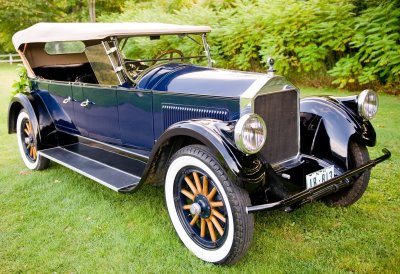
Collector Cars Specialty Coverage

Collectible Auto Insurance

From their ’57 Chevy to their ’69 Pontiac GTO, collector car enthusiasts get revved up about their cars. While they may not be nearly as excited about their insurance, it’s important to find them quality coverage at a good price.

Endorsing a collector car on a standard auto policy may be easier for you, but opting for a specialty policy is usually a better fit for the collector car owner. A specialty policy can provide better value for the owner. For example, specialty carriers provide “agreed value protection,” which means that the car is guaranteed to receive an exact value in the event of a total loss, no matter the market fluctuations.

What’s more, specialty carriers provide lower rates based on how infrequently collectors use these cars. Some carriers may also provide added value for the customer, such as claims people who "get" collector cars, and flatbed towing in the case of a breakdown.

Agreed vs. Stated Value

Agreed value protection, also called an “agreed value policy,” means that a collector car is insured for a specific dollar amount that the insured and carrier have agreed upon. The value is based on the car’s number of original parts and the quality workmanship of modified parts. The owner of the vehicle will receive the agreed amount in the event the car is totaled, no matter the market fluctuations.

In comparison, a “stated value policy” takes market value fluctuations into account. For example, under a stated value policy (often used by standard auto carriers), a collector car may be insured at the cash value of $20,000. But if the car is totaled in an accident, the car owner may only receive $15,000 because of a drop in market value.

Assess the Value

One of your biggest challenges may be to accurately assess a car’s value. A specialty carrier can help you determine what the agreed value should be. You’ll just need to gather some of the following information:

Identify whether it’s a professionally restored original car, an un-restored original, or a “driver” car.:

A professionally restored original has been restored to its original specifications yet still has the original engine and drive train. These cars demand a premium, especially if everything is documented. An un-restored original is a completely original car that has the original paint, interior, engine and drive train.A driver car, the most common collector car, is perfect for the enthusiast who can’t afford a six-figure investment. It’s still collectible but not worth as much as an original because of changes made to the engine, interior and paint. You need to understand whether or not modifications warrant an increase in value by asking:

What type of engine? Who built it? How much did they invest?What body modifications have they made? (chopped, channeled, sectioned, etc.)Who painted it? How much did they invest?Who did the interior work? Is it custom or factory replacement? What type of transmission and differential do they have? How much did they invest in the drive train?

For A Collectibe Car Insurance Quote Please Contact
Jason Shroot at 714-988-3325.

Monday, March 21, 2011

Water Back Up Insurance Covearge of Sewer & Drains

Do You Know What Happens...When your Sump Pump or Sewer Line Fails, you get Water Back Up from Sewers and Drains and Your House is now FLOODED...???

The back up of sewer and drains as well as the failure of a sump pump is typically EXCLUDED from a standard Homeowners Policy &/or Flood insurance Policy.  The damage you can sustain from these problems will also not usually be covered including the cost of losses and clean up.
To Properly Proect Your Home...You Should ENDORSE your homeowners insurance policy with Coverage for Water Back Up & Sump Pump Overflow.

Heavy rains can trigger a back up. Storm and sanitary sewers can't handle the heavy flow and can back up into your home through sump wells or washtubs and toilets in the basement. Sump pumps usually fail from power outages or motor failures as they run on electricity and during a bad storm many times the power will go out. You can get sump pumps with battery back ups, which can help for a period of time but not for ever. Beyond the water in your basement making a mess, water can also damage things such as washer and dryers, furnaces, hot water tanks and just all the stuff you store in your basement! Water and sewage will pretty much destroy whatever it comes in contact with. If it isn't cleaned properly mold can become a serious problem rather quickly.

Also remember Flood Policies have limited coverage. Even if you have Flood Coverage you should also have the Water Back Up & Sump Pump Overflow Endorsement as the endorsement will cover items not covered on your Flood Policy.

Endorsing your Homeowners Policy with the Water Back Up & Sump Pump Overflow coverage (fairly inexpensive!) will save you thousands in clean up dollars!

Please contact Jason Shroot To Learn More About This and other additional Endorsements You Can Add To your homeowners insurance policy to properly protect you, your faimly and your assets.

Please Call: 714-988-3325
Please Email: jason@diversifiedinsurancequotes.com
Please Visit:  www.jasonsellsinsurance.com

Wednesday, March 16, 2011

What To Do When You Are In A Car Accident...

Your Consumer Car Accident Rights
1.  First and foremost try to remain calm. After you have been involved in an accident you need to make important decisions. Being panicked will not help you make good decisions.

2.  If your vehicle is still drivable stop and pull it off to the side of the road. If you do not stop you could be charged with hit and run even if the accident was not your fault.  Hit-and-run penalties are severe. Depending on the damage or injuries, you may be fined, sent to jail or both.  You also could lose your driver’s license.  If you hit a parked car or other property, try to locate the owner or driver.  If you cannot, most laws says you may drive away only after you leave behind, in a conspicuous place, your name, address and an explanation of the accident, and the name and address of your car’s owner (if other than yourself).


  a. Before you get out of your car, make sure you are in safe surroundings. Depending on where the accident occurred, traffic may still be incoming and could create a potentially hazardous situation for you.  If you are in a high traffic zone such as a highway or a busy street, communicate with the other driver to move your cars away from the traffic as much as possible.  This of course, is only possible when your vehicles have sustained little damage and are still operational

3.  Notify the local police or Highway Patrol either by telephone or in person as soon as possible.  You must call the police or Highway Patrol if the accident caused a death or injury.  An officer who comes to the scene of the accident will conduct an investigation. If an officer doesn’t show up, you must make a written report on a form available at the police department or Highway Patrol office as soon as possible.

4.  Document everything and exchange information with the other driver or drivers.  Make sure you get the other driver’s name and driver’s license number, the other car’s make, year, model, license plate number and expiration date, and vehicle identification number.  You can utilize your phone’s camera to capture most of this information. Also make sure you have the vehicle identification number of the car you are driving, the name and address of the car’s owner, the name and address of their insurance company and their insurance policy.  

Other information you should gather and document are:

a.The names, addresses, telephone numbers and insurance companies of the other car’s legal and registered owners—if the driver does not own the car. b.The names, addresses, dates of birth, driver’s license numbers and telephone numbers of any passengers in the other car. c.The names, addresses and telephone numbers of any witnesses to the accident. Ask them to stay to talk to the Highway Patrol or police. If they insist on leaving, ask them to tell you what they saw and write everything down. d.Try to identify people at the accident scene, even if they will not give their names. For example, if someone who saw the accident drives off, take down his or her license plate number. Law enforcement officials can trace the owner’s name and address. e.The name and badge number of the law officer who comes to the accident scene. Ask the officer where and when you can get a copy of any accident report. f.If there are skid marks on the road, pace them off and take a digital picture. Take digital pictures of the positions of any crosswalks, stop signs, traffic lights or streetlights. Be aware of traffic conditions and don’t take any pictures that could place you in a position of harm. Make notes, too, on weather and road conditions. If the accident happened after dark, note whether the streetlights were on. Estimate your speed and that of the other vehicle.  g.Take as many digital photos of the accident scene as you can.

Documentation is VERY important!
5.  If you have emergency flares or triangles place them on the road. You should also turn on your car’s hazard lights and lift your hood to warn others on the road.

6.  Contact as many other people you feel you need to and explain the situation and give the exact location of the accident, so that help can arrive quickly. Be sure to mention whether you need an ambulance or a fire engine. If you are unable to reach someone or one of your emergency contacts does not call you back, flag down a passing car and ask the driver to go for help. The driver may have a cellular phone in the car and can make an emergency call on the spot.

7. If you are ok and someone else is injured. You should do your best to provide assistance to anyone who is injured.  For example, you may need to call an ambulance, take the injured person to a doctor or hospital, or give first aid—if you know how.  You should not attempt to move someone who is badly hurt; you could make their injuries worse. On the other hand you should move someone who is in danger of being hurt worse or killed even if you do make the injury worse.

8.  What if I get a ticket? Accept it and Sign it.  Just because you receive a ticket does not mean you accepting responsibility for the accident.  When you sign accept and sign a ticket you are only promising to appear in court.  If you do not sign the ticket, the police officer can arrest you. While it is okay to sign the ticket, you may want to talk with your attorney before you pay a fine or plead guilty to the charges. Find out if you can attend traffic school instead.  If you plead guilty, you may hurt your chances of collecting damages from the other driver later.  Or, you may help the other driver to collect damages from you.

9.  Who is responsible for paying for the damage to my car?  That depends on who is at fault, whether you and the other driver have insurance and what kind of insurance you have.  There are two major types of automobile insurance: liability and collision.

Liability. If you are to blame for an accident, your liability insurance will pay the other driver for property damage and personal injuries up to your policy’s limits.  If you are not at fault, the other driver’s liability insurance pays for your car damage and/or personal injuries up to the policy limits of the other driver’s policy.

Collision. No matter who is at fault, your collision insurance pays for damages to your car (not your medical expenses), minus the policy deductible.

You may have other insurance, too. Your health insurance, for example, may pay your medical bills. Also, your automobile insurance may have medical payments coverage. If so, it can pay the cost of necessary medical treatment for you and your passenger up to the medical payment policy limits.

10. What happens if the other driver does not have insurance? If the other driver caused the accident and is not insured if you have uninsured motorist or medical payments coverage your insurance policy will typically pay for your injuries up to the specified limits in your policy. If the other driver’s insurance is not enough to pay for all of your damages, your insurance company may pay the difference—if you have underinsured motorist coverage. If you have collision insurance, it usually pays for the damage to your car, minus your deductible, no matter who is at fault.

11.  Should I see a doctor after an accident?  A visit to the doctor may be a good idea for both you and your passengers if any of you have concerns about your health. You could be injured and not know it right away. You may wish to call your doctor or another health care provider for advice. Your automobile insurance may pay some or all of these health care bills. You should consult your policy or agent for details on what is covered.

For More Safety Tips Or Your Free Insurance Quotes Please Contact Jason Shroot At Diversified Insurance Quotes.

Please Call Me At 714-988-3325 or Email Me at Jason@diversifiedinsurancequotes.com